👇 SCROLL DOWN TO WATCH THE VIDEO! 🎥🚨
Woman Arrested After Dramatic Police Traffic Stop — What Criminal Defense Lawyers Say About Her Rights Could Change Everything
A routine traffic stop. A frightened female driver. A tense confrontation with police. And one question that could determine the entire outcome: Did officers follow the law?
In the United States, an ordinary encounter between a police officer and a driver can quickly become a complicated criminal investigation.
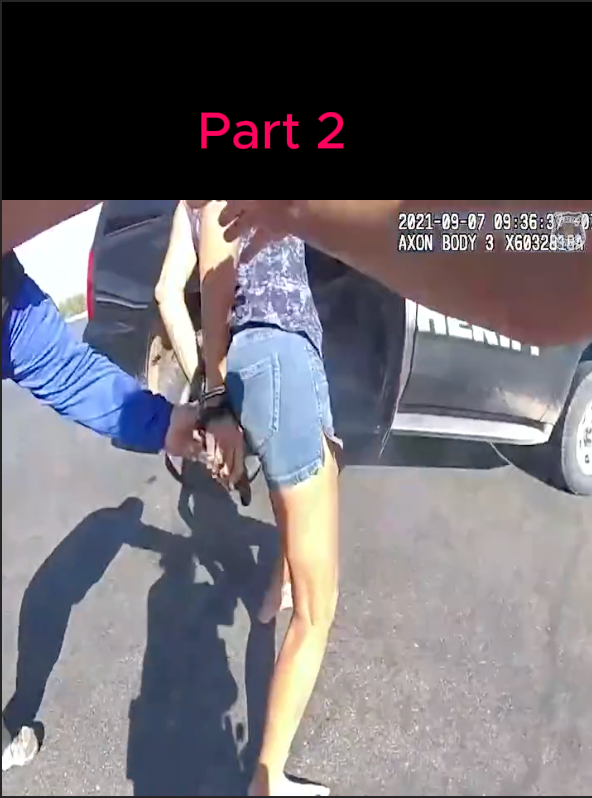
For many people, seeing a woman surrounded by police officers, ordered out of her vehicle, handcuffed, and placed inside a patrol car immediately raises questions.
What did she do?
Was she actually guilty of a crime?
Could the police legally search her vehicle?
Should she have requested a lawyer before answering questions?
And if the arrest was unlawful, could she sue the police department?
These are not merely questions for social media.
They are central issues in American criminal law, constitutional rights, and the legal services industry.
To understand how such cases unfold, consider a fictional scenario involving a woman arrested during a late-night traffic stop.
The circumstances are hypothetical, but the legal principles discussed below reflect important concepts in United States criminal procedure.
PART 1 — A Late-Night Police Stop Turns Into a Criminal Arrest
It is shortly after 11 p.m. on a busy American highway.
A 29-year-old woman named Jessica Miller is driving home after visiting friends.
Suddenly, flashing red and blue lights appear in her rearview mirror.
A police officer signals for her to pull over.
Jessica slows down and stops along the shoulder.
At first, the encounter seems routine.
The officer approaches the driver’s window and asks for her license, registration, and proof of insurance.
Jessica provides the documents.
The officer explains that he observed her vehicle drifting across a lane marking.
He asks whether she has consumed alcohol.
Jessica denies drinking.
But the officer notices that she appears nervous.
Her hands are shaking.
She struggles to answer several questions.
The officer asks her to step out of the vehicle.
Jessica hesitates.
“Am I under arrest?” she asks.
“Not at this moment,” the officer replies.
He tells her that he wants to investigate whether she is safe to drive.
A second patrol vehicle arrives.
Jessica becomes increasingly distressed.
She asks whether she can call her lawyer.
The officers explain that the investigation is continuing.
After further questioning, the primary officer announces that Jessica is under arrest on suspicion of driving under the influence.
She is handcuffed and placed in a patrol vehicle.
A search of the vehicle follows.
Officers discover a small container holding an unidentified substance.
The discovery raises the possibility of additional criminal charges.
What began as a traffic violation has become a potentially serious legal matter.
But whether the police acted lawfully depends on details that a viral video may not reveal.
The First Legal Question: Was the Traffic Stop Lawful?
Under the Fourth Amendment to the United States Constitution, people are protected against unreasonable searches and seizures.
A traffic stop is considered a seizure.
Generally, an officer must have a legally sufficient basis to stop a vehicle, such as reasonable suspicion of a traffic violation or criminal activity.
A vehicle crossing a lane marking may provide grounds for a stop under some circumstances.
However, state traffic laws and the specific facts matter.
A criminal defense attorney would examine the officer’s explanation, dashboard camera footage, body-camera recordings, and any available witness evidence.
If the stop was unconstitutional, certain evidence obtained afterward might be subject to suppression.
That does not automatically mean the entire case will be dismissed.
The legal consequences depend on the relationship between the unlawful conduct and the evidence.
Why Nervousness Does Not Automatically Prove Guilt
Many people become anxious when interacting with law enforcement.
An innocent driver may tremble, speak quickly, or struggle to remember details.
Courts generally assess nervous behavior in the context of the entire encounter.
Nervousness alone is not a reliable substitute for legally sufficient evidence of criminal activity.
An experienced criminal defense lawyer may challenge an officer’s interpretation of behavior when it is used to justify extending a stop or conducting additional investigative procedures.
Can Police Order a Driver Out of the Car?
During a lawful traffic stop, police generally may order the driver to exit the vehicle.
This principle was recognized by the United States Supreme Court in Pennsylvania v. Mimms.
However, an officer’s authority to direct someone out of a vehicle does not automatically authorize every subsequent search or detention.
The legality of further actions must be evaluated separately.
What Happens When a Driver Refuses Police Commands?
A refusal to comply with a lawful command may create additional legal consequences.
But not every disagreement or request for clarification constitutes obstruction or resisting arrest.
State laws differ.
A lawyer must evaluate the actual commands, the officer’s authority, the driver’s conduct, and the surrounding circumstances.
For Jessica, the most important issue may be whether her actions amounted to criminal resistance or simply confusion during a stressful encounter.
PART 2 — Handcuffed, Questioned, and Searched: The Rights Every Suspect Should Understand
After Jessica is arrested, officers transport her to a nearby police station.
She is frightened and uncertain about what will happen next.
She worries about losing her job.
She also fears that the arrest will become public.
At the station, an investigator begins asking questions.
Where had she been?
Who was she visiting?
Did she know what was inside the container recovered from her vehicle?
Jessica considers explaining everything.
But she also remembers hearing that people have a right to remain silent.
This is where legal representation can become particularly important.
1. The Right to Remain Silent
The Fifth Amendment protects against compelled self-incrimination.
In custodial interrogation, Miranda v. Arizona generally requires law enforcement to provide specific warnings before questioning.
Those warnings commonly include the right to remain silent and the right to an attorney.
However, Miranda warnings are not required every time an officer asks a question.
The requirements depend on whether the person is in custody and subject to interrogation.
A failure to provide required warnings may affect the admissibility of statements.
It does not automatically invalidate an arrest.
2. The Right to Request a Criminal Defense Attorney
A person facing criminal accusations may benefit from speaking with a qualified criminal defense lawyer before answering investigative questions.
The Sixth Amendment right to counsel generally attaches at the initiation of formal adversarial criminal proceedings.
Separate Miranda-related protections apply to custodial interrogation.
Because these rights operate differently, the timing and circumstances matter.
A clear request for counsel during custodial questioning can trigger important protections.
People should not assume that simply mentioning the word “lawyer” always has the same legal effect in every situation.
3. Can Police Search a Woman’s Car Without a Warrant?
Vehicle searches are among the most frequently disputed issues in criminal cases.
The Fourth Amendment generally requires searches to be reasonable.
Several exceptions to the warrant requirement may apply to automobiles.
These include consent, probable cause under the automobile exception, and certain inventory searches.
A search incident to arrest has additional limits.
Under Arizona v. Gant, police do not receive unlimited authority to search a vehicle simply because an occupant has been arrested.
The legality of a search depends on the circumstances and the justification relied upon.
In Jessica’s hypothetical case, a defense lawyer would ask why officers searched the vehicle and whether the legal requirements for that particular search were satisfied.
4. What If Police Find Drugs in the Vehicle?
Finding a suspicious substance does not automatically establish that the driver knowingly possessed an illegal drug.
Prosecutors may need to establish the identity of the substance and the elements of possession under applicable law.
Depending on the charge, those elements may include knowledge and control.
A forensic laboratory may analyze the material.
Defense counsel may examine the testing procedures, chain of custody, and evidence connecting the substance to the accused.
For example, a vehicle may be shared with family members or other drivers.
That fact alone does not establish innocence, but it may be relevant to whether the prosecution can prove knowing possession.
5. What Is the Chain of Custody?
Chain of custody refers to the documented handling and transfer of evidence.
In drug-related cases, it can help establish that the item tested by a laboratory is the same item recovered by police.
Investigators may document where evidence was found, who collected it, how it was packaged, and when it was transferred.
A defense attorney may challenge significant gaps or inconsistencies.
Not every documentation error makes evidence inadmissible, but serious problems can affect its reliability or evidentiary weight.
6. Can a Female Suspect Be Handcuffed?
Yes.
The use of handcuffs is not automatically unlawful because a suspect is female.
However, police force must comply with constitutional standards and applicable policies.
The reasonableness of handcuffing depends on the circumstances, including safety concerns, the nature of the suspected offense, resistance, and the duration and manner of restraint.
An officer’s conduct may be challenged when force is objectively unreasonable.
7. Can a Suspect Record the Police?
Recording police officers performing public duties may receive First Amendment protection, subject to reasonable restrictions and jurisdiction-specific law.
The details depend on the location, whether the recording interferes with legitimate police activity, and other circumstances.
A person should not physically obstruct officers or enter restricted areas to obtain footage.
Body-camera recordings can also become important evidence in later criminal or civil proceedings.
8. Why Body-Camera Footage Matters
Police body cameras may capture statements, movements, commands, and other details relevant to an arrest.
The footage can support an officer’s account.
It can also contradict or clarify disputed allegations.
However, a camera may not capture every relevant event.
Its field of view, audio quality, activation timing, and position can limit what the recording proves.
A criminal defense attorney may request available footage through the appropriate discovery process.
9. What Happens During Booking?
After an arrest, a suspect may undergo booking procedures.
These can include identity verification, photographs, fingerprints, property inventory, and administrative processing.
The exact procedures vary by jurisdiction.
A person may then be released, held pending a judicial appearance, or subjected to other legally authorized procedures.
An arrest is not the same as a conviction.
The presumption of innocence remains fundamental to the criminal justice system.
PART 3 — Criminal Defense Lawyers, Bail Bonds, Legal Services, and the Fight to Protect a Woman’s Future
The morning after Jessica’s arrest, her family begins searching for legal help.
They are overwhelmed by unfamiliar terminology.
Criminal defense attorney.
DUI lawyer.
Bail bond service.
Court appearance.
Motion to suppress.
Plea agreement.
Expungement.
Each term represents a different part of the legal process.
Understanding these services can make a substantial difference when someone faces criminal allegations.
10. Why Hiring a Criminal Defense Lawyer Matters
A criminal defense lawyer represents individuals accused of crimes.
The lawyer’s responsibilities may include reviewing evidence, evaluating constitutional issues, advising the client, negotiating with prosecutors, filing motions, and representing the accused in court.
A lawyer can also explain potential penalties and the collateral consequences of a conviction.
These may include employment difficulties, professional licensing issues, immigration consequences, and driving restrictions.
Legal representation does not guarantee dismissal or acquittal.
Its purpose is to protect the client’s rights and provide informed advocacy.
11. What Does a DUI Attorney Do?
A DUI attorney focuses on cases involving allegations of impaired driving.
Depending on the jurisdiction and facts, a DUI defense may involve reviewing:
- The legal basis for the traffic stop.
- Field sobriety testing.
- Breath or blood alcohol testing.
- Drug recognition evidence.
- Body-camera and dashboard-camera footage.
- Laboratory procedures.
- Administrative driver’s license proceedings.
- Possible constitutional violations.
DUI laws differ significantly between states.
Some jurisdictions impose mandatory minimum penalties for certain offenses.
Others provide diversion or treatment-based alternatives for eligible defendants.
A qualified local attorney can explain which options may apply.
12. How Much Does a Criminal Defense Lawyer Cost?
Legal fees vary widely.
Factors include the seriousness of the charge, the attorney’s experience, the geographic market, the complexity of the evidence, and whether the case proceeds to trial.
Some lawyers charge a flat fee for particular services.
Others use hourly billing or other lawful fee arrangements.
Clients should request a written fee agreement explaining the scope of representation, payment obligations, and any additional expenses.
A lower advertised fee does not necessarily mean lower total costs.
Likewise, a higher fee does not guarantee a better result.
The most important considerations are competence, relevant experience, communication, and a clear understanding of the representation.
13. What If Someone Cannot Afford a Lawyer?
In qualifying criminal proceedings, defendants who cannot afford counsel may be entitled to appointed representation.
Eligibility and procedures depend on the jurisdiction and the nature of the proceedings.
Public defenders and other appointed lawyers provide essential criminal defense services.
A person should ask the court about the process for requesting counsel rather than assuming that private representation is the only option.
14. What Is a Bail Bond Service?
Bail is a legal mechanism that may permit a defendant’s release while criminal proceedings continue.
Depending on the jurisdiction, a court may impose monetary bail, nonmonetary conditions, or other release requirements.
Some states permit commercial bail bond services.
A bail bond company may provide a bond in exchange for a fee and other contractual obligations.
However, commercial bail bonding is restricted or unavailable in certain jurisdictions.
A bail bond service is not the same as a criminal defense attorney.
It generally does not provide legal representation.
15. Can a Woman Be Released Without Paying Bail?
In some circumstances, defendants may be released on their own recognizance or under nonmonetary supervision conditions.
Courts may consider factors such as the nature of the charges, criminal history, risk of nonappearance, and public safety.
Release decisions depend on applicable law.
A defendant should understand all court-ordered conditions.
Violating those conditions can lead to serious consequences.
16. What Happens at the First Court Appearance?
The first court appearance varies by jurisdiction.
It may involve advising the accused of charges, addressing counsel, and considering release conditions.
A later arraignment may involve entering a plea.
The timing and procedures depend on state law and the particular court system.
A criminal defense lawyer can explain which decisions must be made immediately and which issues can be addressed later.
17. Can Criminal Charges Be Dismissed?
Yes, criminal charges can be dismissed for different reasons.
Examples may include insufficient evidence, procedural defects, prosecutorial decisions, or successful legal motions.
But dismissal is not automatic merely because the accused disputes the allegations.
A defense lawyer must evaluate the evidence and applicable legal standards.
18. What Is a Motion to Suppress Evidence?
A motion to suppress asks a court to exclude certain evidence based on a legal violation.
For example, a defendant may challenge evidence obtained through an unconstitutional search.
The court may hold a hearing and examine testimony, recordings, reports, and other materials.
If the motion succeeds, the prosecution may be unable to use the excluded evidence for certain purposes.
The effect on the overall case depends on what evidence remains.
19. What Is a Plea Agreement?
A plea agreement is an arrangement in which a defendant agrees to plead guilty or no contest under terms negotiated with the prosecution, subject to applicable law and court approval.
Such agreements may address charges, sentencing recommendations, or other issues.
A plea can have significant long-term consequences.
Defendants should understand the rights they are waiving and the possible effects before entering a plea.
A plea agreement is not necessarily appropriate in every case.
20. Can a Defendant Avoid Jail?
Whether a defendant can avoid incarceration depends on the offense, criminal history, sentencing laws, and case-specific circumstances.
Possible outcomes in eligible cases may include probation, diversion, treatment requirements, community service, fines, or other alternatives.
Some offenses carry mandatory incarceration requirements.
No attorney can responsibly guarantee a particular sentencing outcome.
21. Can an Arrest Affect Employment?
An arrest may create employment concerns even when a case does not result in conviction.
The legal consequences depend on the jurisdiction, the type of employment, and applicable employment and background-check laws.
Certain professions have licensing or reporting requirements.
People facing criminal allegations may benefit from asking counsel about both the immediate charges and their longer-term professional consequences.
22. What Is Criminal Record Expungement?
Expungement and record sealing are legal processes that may limit public access to certain criminal records.
Eligibility varies by state.
Some jurisdictions permit relief after dismissal, acquittal, or completion of particular sentences.
Other offenses may be ineligible.
An attorney who handles expungement matters can explain the relevant requirements and whether a petition is appropriate.
23. Can Someone Sue the Police for an Unlawful Arrest?
Under certain circumstances, a person may pursue a civil claim involving alleged police misconduct.
Potential issues include unlawful arrest, unreasonable searches, or excessive force.
Federal civil rights litigation may involve 42 U.S.C. § 1983 when a person alleges that someone acting under color of state law violated federally protected rights.
Such lawsuits involve complex requirements and possible defenses, including qualified immunity for individual officials in some circumstances.
The existence of an arrest or dismissed charge does not automatically establish civil liability.
24. What Does a Civil Rights Attorney Do?
A civil rights attorney may represent individuals alleging violations of constitutional or statutory rights.
In police-related cases, the lawyer may review body-camera footage, arrest reports, witness statements, medical records, and other evidence.
The attorney may also evaluate filing deadlines, immunity issues, potential defendants, and available remedies.
Civil rights claims are distinct from criminal defense representation.
A person may need different lawyers for the criminal case and a potential civil lawsuit.
25. Can Someone Receive Compensation for Excessive Police Force?
A successful civil claim may support certain legal remedies, depending on the facts and applicable law.
Potential damages may include qualifying economic losses and compensation for legally recognized injuries.
Punitive damages may be available against certain individual defendants under applicable standards, but not against municipalities under federal Section 1983 claims.
There is no guaranteed settlement amount.
Outcomes depend on liability, evidence, damages, defenses, and the legal process.
26. How to Choose a Criminal Defense Attorney
Selecting legal representation is an important decision.
Prospective clients should consider whether the attorney is licensed in the relevant jurisdiction and has experience with similar cases.
They may also ask about the attorney’s approach to reviewing evidence, communicating with clients, and preparing for hearings.
A written fee agreement should clearly explain what services are included.
Clients should be cautious of anyone promising a guaranteed acquittal, dismissal, or settlement.
27. Why Legal Consultation Can Be Valuable Before Trial
Early legal advice may help preserve important evidence and prevent avoidable procedural mistakes.
Body-camera footage, surveillance recordings, witness information, and other records may become more difficult to obtain over time.
An attorney can determine which preservation requests or legal filings are appropriate.
The value of legal advice lies in understanding the facts, applicable law, and available choices.
28. Why Social Media Does Not Decide Criminal Guilt
Police videos frequently attract strong reactions.
Viewers may believe a suspect is guilty after watching only a few seconds.
Others may conclude that officers acted unlawfully without seeing the full encounter.
Neither reaction replaces the legal process.
Criminal guilt must be established through the applicable standards of proof and lawful proceedings.
Short video clips may omit critical context.
That is why lawyers, investigators, and courts examine more than viral footage.
29. The Difference Between Being Arrested and Being Convicted
An arrest occurs when law enforcement takes a person into custody under legally authorized circumstances.
A criminal charge is an allegation.
A conviction results from a legally sufficient guilty plea or finding of guilt.
These are different stages of the justice system.
A woman shown being handcuffed in a viral police video should not automatically be described as a convicted criminal.
Responsible reporting must distinguish allegations from established findings.
30. Why Understanding Legal Rights Matters
Jessica’s fictional arrest illustrates how quickly an ordinary encounter can develop into a complicated criminal case.
A traffic stop may raise constitutional questions.
A vehicle search may produce disputed evidence.
Statements to police may affect the prosecution.
Release conditions may affect employment and family responsibilities.
And the final outcome may depend on both the evidence and the quality of legal representation.
Understanding these issues does not mean avoiding accountability.
It means recognizing that the American justice system is built around legal procedures, constitutional protections, and the presumption of innocence.
Final Thoughts — One Arrest Can Change a Life, but the Law Still Matters
A woman surrounded by police officers may become the subject of a viral video within hours.
Millions of viewers may form opinions before any court hearing takes place.
But the legal questions are rarely as simple as they appear on screen.
Was the stop justified?
Was the search constitutional?
Were the suspect’s statements obtained lawfully?
Did the prosecution have sufficient evidence?
Were the defendant’s rights protected?
Could a qualified criminal defense attorney identify issues that might change the outcome?
These questions are why criminal defense lawyers, DUI attorneys, public defenders, and civil rights attorneys play important roles in the American legal system.
An arrest may begin with flashing police lights, but the outcome is determined through evidence, legal standards, and the courts — not social media judgment.
Để lại một phản hồi