👇 SCROLL DOWN TO WATCH THE VIDEO! 🎥🚨
Police Arrest Suspect as $2,000 Target Scam Falls Apart — A Retail Fraud Case With Serious Legal Consequences
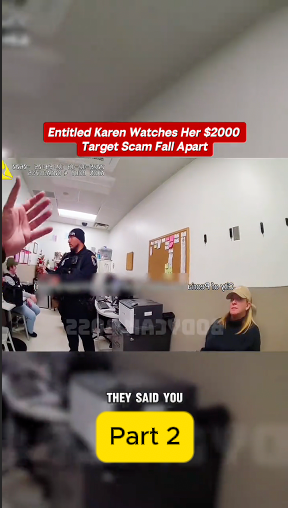
A shopping trip to Target can turn into a serious criminal investigation when store employees suspect that someone is attempting to obtain thousands of dollars in merchandise through deception. In a dramatic police encounter described online as a “$2,000 Target scam,” a suspect reportedly watched an alleged scheme unravel as store security and law enforcement became involved.
What may have appeared to be an ordinary retail transaction quickly developed into a situation involving questions of fraud, criminal intent, police authority, and the possibility of arrest.
The alleged value of the transaction—approximately $2,000—makes the case particularly significant. In many American jurisdictions, the value of merchandise involved in a suspected theft or fraud can influence the severity of criminal charges.
But the legal consequences of a retail fraud allegation extend beyond the potential loss of merchandise.
A person accused of orchestrating a scheme at a major retailer may need the assistance of a criminal defense attorney, face court proceedings, or become involved in civil litigation. Meanwhile, retailers must ensure that their loss-prevention practices comply with applicable laws.
The precise location, identity of the suspect, charging documents, and final court outcome of the incident referenced by the online title have not been independently established for this article. The following discussion examines the reported scenario and the legal issues that commonly arise in similar retail fraud investigations.
How an Alleged $2,000 Target Scam Can Become a Police Matter
Large retailers such as Target process enormous numbers of transactions every day. Most are legitimate purchases, returns, and exchanges.
However, retailers also investigate suspected schemes involving merchandise, payment methods, refunds, and other transactions.
Retail fraud may involve different forms of conduct, including false refund claims, fraudulent returns, altered price information, unauthorized payment methods, or deliberate manipulation of a checkout transaction.
The specific method allegedly used in the incident described by the viral title has not been verified. It would therefore be inaccurate to identify a particular technique as the one used in this case.
What matters legally is whether a person knowingly attempted to obtain money, merchandise, or another benefit through deception or other conduct prohibited by law.
When employees identify a suspicious transaction, they may notify loss-prevention personnel. Security employees can review available transaction records, surveillance footage, and other information to determine whether further investigation is appropriate.
If the circumstances suggest criminal activity, law enforcement may be contacted.
An encounter that initially concerns a store transaction can then become a criminal investigation, particularly if officers believe there is probable cause to make an arrest.
However, suspicious behavior alone does not automatically establish guilt.
Investigators must distinguish deliberate fraud from mistakes, misunderstandings, technical errors, or transactions that merely appear unusual.
The Moment a Suspected Fraud Scheme Falls Apart
The dramatic appeal of a police bodycam video often comes from the moment a suspect realizes that an investigation is underway.
A person who believed a questionable transaction would go unnoticed may suddenly be confronted with questions about receipts, payment records, or merchandise.
In a suspected $2,000 retail fraud case, officers might examine the available information and ask the individual to explain the transaction.
Store security may also provide documentation indicating why employees believe the transaction was improper.
However, an individual’s nervousness, frustration, or refusal to accept an accusation is not proof of criminal intent.
A customer may react emotionally to being questioned, particularly when confronted by uniformed officers in a public setting.
The relevant legal question is whether the evidence supports the elements of a criminal offense.
If prosecutors eventually file charges, they may rely on transaction records, video evidence, employee statements, and other admissible materials.
A criminal defense lawyer may challenge the interpretation of that evidence and present alternative explanations when supported by the facts.
That is why a dramatic moment captured on camera should not be confused with a final legal determination.
When Does Retail Fraud Become a Felony?
One of the most important issues in a suspected $2,000 fraud case is the potential classification of the offense.
In the United States, criminal laws vary by state. Different jurisdictions establish different monetary thresholds and offense definitions for theft, fraud, and related crimes.
A transaction involving approximately $2,000 may exceed the felony threshold for certain offenses in some states, while another state’s law may classify the conduct differently.
The amount alone does not determine the charge.
Prosecutors may also consider the alleged method, the nature of the property, the defendant’s intent, and any other statutory factors.
Potential charges in comparable cases could include theft by deception, retail theft, fraud, or another offense recognized under state law.
In some circumstances, attempts to commit an offense may also be prosecuted even when the alleged scheme was unsuccessful.
Possible penalties depend on the charge and jurisdiction. They may include fines, restitution, probation, community-based sanctions, or incarceration.
These are general possibilities, not verified charges or penalties imposed in the particular Target incident.
A defendant remains presumed innocent unless proven guilty through the legal process.
Why Criminal Intent Is Central to Fraud Charges
A critical distinction in criminal fraud cases is the difference between an intentional scheme and an honest mistake.
Retail transactions can be complicated.
Customers may misunderstand return policies, enter incorrect information, encounter payment errors, or receive inconsistent instructions from store employees.
Not every incorrect transaction is criminal.
Fraud offenses generally require proof of specific statutory elements, which may include knowingly making a false representation, acting with fraudulent intent, or obtaining property through deception.
The precise requirements vary by jurisdiction and offense.
For example, a customer who accidentally presents the wrong receipt may be in a very different legal position from someone who deliberately creates false documentation to obtain a refund.
Likewise, an employee’s suspicion does not automatically prove that a customer intended to deceive the store.
A criminal defense attorney may examine whether the accused knew a representation was false, whether the store actually relied on it, and whether the alleged conduct satisfies the applicable statute.
Evidence of intent can be disputed.
Communications, receipts, transaction histories, witness statements, and surveillance footage may all influence how the case is evaluated.
Ultimately, the prosecution must prove the required elements beyond a reasonable doubt to obtain a criminal conviction.
Why Hiring a Criminal Defense Lawyer Matters
An accusation involving approximately $2,000 in alleged retail fraud should not be dismissed as a minor customer-service disagreement.
Depending on the state and the nature of the allegations, the accused may face significant legal consequences.
A qualified criminal defense lawyer can review the case and explain the available options.
Legal representation may be especially important when police have already made an arrest or prosecutors are considering felony charges.
An attorney may investigate whether officers had probable cause, whether statements were obtained lawfully, and whether the available evidence supports the accusation.
The defense may also examine transaction records to determine whether the alleged loss amount is accurate.
In some cases, the value of disputed merchandise or funds can affect the classification of an offense.
A defense lawyer may also evaluate whether evidence should be excluded, whether the charges can be challenged, or whether a negotiated resolution is appropriate.
Depending on the jurisdiction and the defendant’s circumstances, alternatives such as diversion programs or negotiated pleas may be available.
No attorney can guarantee dismissal or a favorable result. The outcome depends on the evidence, the law, and the court proceedings.
Can Target Recover Money Through a Civil Lawsuit?
Criminal prosecution is not the only potential legal consequence of retail fraud.
In appropriate circumstances, a retailer may pursue civil remedies for financial losses caused by unlawful conduct.
Depending on state law, those remedies may include restitution through criminal proceedings, civil recovery claims, or other available legal actions.
Some jurisdictions have specific civil recovery statutes related to retail theft. These laws can permit certain claims against individuals accused of taking merchandise, subject to statutory requirements and limitations.
However, a retailer’s right to recover money is not unlimited.
The company must have a valid legal basis for the claim, and any requested damages must comply with applicable law.
A criminal case and a civil case are separate proceedings with different legal standards and procedures.
A person may therefore need advice from a criminal defense attorney, a civil litigation lawyer, or both.
In a case involving disputed transactions or alleged financial losses, attorneys may examine receipts, payment records, inventory information, and other evidence to assess the claim.
The fact that a retailer reports a suspected $2,000 loss does not, by itself, establish that a court will award that amount.
What If Store Security Wrongfully Accuses Someone?
While retailers have legitimate interests in preventing theft and fraud, customers also have legal rights.
A person who is falsely accused of committing a crime may experience embarrassment, reputational harm, or financial consequences.
Whether those circumstances support a lawsuit depends on what occurred and the applicable law.
Many states recognize a form of shopkeeper’s privilege, which may allow retailers to detain suspected shoplifters for a reasonable period under specified conditions.
The requirements and limitations vary.
If a detention is unreasonable or lacks a legally sufficient basis, a customer may have grounds to explore potential civil claims.
Possible legal theories, depending on the circumstances, include false imprisonment, false arrest, or other recognized causes of action.
A defamation claim may also be considered where false statements were communicated to others and the legal elements are satisfied.
However, being questioned by security or experiencing embarrassment does not automatically create a successful lawsuit.
A civil litigation attorney would need to examine what store employees knew, what they communicated, how the detention occurred, and whether the customer’s rights were violated.
Could Police Be Sued Over a Wrongful Arrest?
Police officers responding to a suspected retail fraud incident must comply with constitutional and statutory requirements.
An officer may consider information from store employees, surveillance footage, transaction records, and witness accounts when determining whether probable cause exists.
However, the existence of a store complaint does not automatically make every detention or arrest lawful.
A person who believes they were arrested without a sufficient legal basis may wish to consult a civil rights attorney.
Potential claims may involve constitutional protections against unreasonable seizures or other rights, depending on the facts.
In certain circumstances, a lawsuit under federal civil rights law may be considered.
But such litigation can be complex.
Legal doctrines, including qualified immunity and other defenses, may affect whether claims against officers can proceed.
Additionally, an arrest that does not result in a conviction is not necessarily wrongful.
The legality of an arrest generally depends on the circumstances and information available to officers at the relevant time, not solely on the eventual result of a criminal case.
A lawyer experienced in police misconduct litigation can evaluate whether the evidence supports a viable claim.
Why Surveillance Footage Is So Important
Retail fraud investigations often depend heavily on video recordings and digital records.
Major retailers commonly use surveillance systems to monitor transactions, store entrances, checkout areas, and other locations.
Video may help establish where a person went, which merchandise was handled, and what occurred during a disputed transaction.
However, surveillance footage does not always tell the entire story.
Camera angles can be limited, timestamps may need to be verified, and some relevant events may occur outside the recorded area.
Transaction records can provide additional context.
For example, a receipt may show which items were scanned, while payment records may indicate whether a transaction was completed or reversed.
A defense attorney may compare these records with witness statements and the timeline of events.
In a fraud case, small details can be significant.
A discrepancy between a store employee’s recollection and the actual transaction record may affect the strength of an allegation.
Conversely, consistent evidence from multiple independent sources may strengthen the prosecution’s case.
The legal process is designed to evaluate that evidence rather than rely exclusively on the most dramatic moments of a viral video.
What Should Someone Do After Being Accused of Retail Fraud?
Anyone accused of committing retail fraud should take the situation seriously, particularly when police are involved.
Remaining calm and avoiding physical confrontation can reduce the risk of escalation.
A person should preserve relevant documents, including receipts, electronic payment confirmations, transaction histories, and communications with the retailer.
They should also avoid destroying or altering potential evidence.
When questioned by law enforcement, individuals may have constitutional rights relevant to the situation, including protections against compelled self-incrimination.
The specific rules depend on whether the encounter is consensual, whether the person is detained, and other legal circumstances.
A qualified attorney can explain how those rights apply.
If formal charges are filed, the accused should pay close attention to court dates, release conditions, and instructions from legal counsel.
Ignoring a criminal summons or court order can create additional legal problems.
For someone who believes they were wrongfully accused, documenting the encounter and obtaining legal advice may also be important.
The Larger Debate Over Retail Fraud and Customer Rights
Retailers face genuine challenges from theft, fraudulent transactions, and other forms of financial loss.
Preventing those losses helps protect employees, customers, inventory, and business operations.
At the same time, effective loss prevention requires accurate investigations and respect for individual rights.
An aggressive security response to an innocent mistake can create serious consequences for a customer.
Conversely, deliberate fraud can harm businesses and expose the responsible individual to substantial criminal penalties.
The appropriate response depends on evidence, proportionality, and compliance with the law.
Police officers, retailers, prosecutors, defense attorneys, and civil courts all play different roles in addressing these disputes.
The alleged $2,000 Target scam demonstrates why retail incidents can involve far more than a disagreement at a checkout counter.
A disputed transaction may develop into a criminal investigation, a defense case, a restitution claim, or even civil litigation.
Final Thoughts: A $2,000 Allegation Can Carry Serious Consequences
The story of a suspected $2,000 Target scam is compelling because it illustrates how quickly a retail transaction can become a major legal problem.
For an accused individual, the consequences may include arrest, criminal charges, legal expenses, and potential damage to employment opportunities.
For the retailer, the situation may involve financial losses, security procedures, and the possibility of litigation.
For law enforcement, the responsibility is to investigate the allegation fairly and determine whether the evidence justifies further action.
A viral video may capture the moment a suspected scheme appears to collapse, but it cannot replace a complete investigation or a court’s determination.
The central lesson is that fraud allegations should be evaluated through evidence and applicable law—not merely through public reaction.
Whether a person needs a criminal defense lawyer, a civil litigation attorney, or another legal professional depends on the actual circumstances of the case.
Legal Disclaimer
This article is intended for general informational and educational purposes only. It discusses an alleged retail fraud scenario described in an online video title. The suspect’s identity, exact location, specific alleged method, criminal charges, and final legal outcome have not been independently verified. Nothing in this article should be interpreted as establishing any individual’s guilt.
Criminal fraud statutes, retail theft laws, civil liability rules, and court procedures vary by jurisdiction. This article does not constitute legal advice or create an attorney-client relationship. Individuals facing criminal allegations or considering civil litigation should consult a licensed attorney in the relevant jurisdiction.
Để lại một phản hồi